The itch
Most home search tools tell you square footage and school ratings, but they're surprisingly bad at the question I actually cared about: how far is this house from the things in my life? Coffee, gym, my parents, the airport. I wanted to filter by proximity to the places that matter to me, not by zip code.
The first prototype
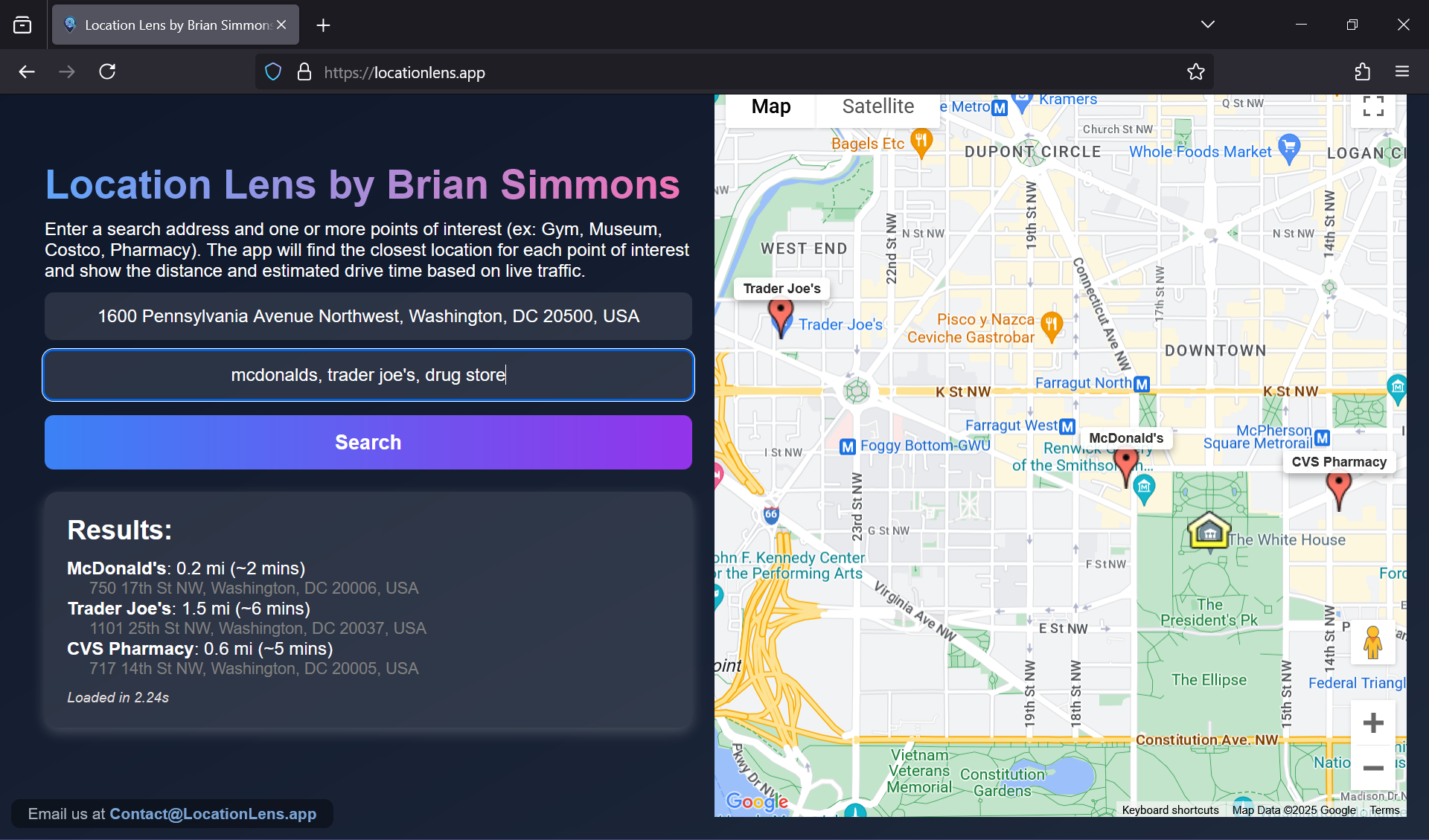
I built the first version in a weekend with Node.js, Express, and the Google Maps Places + Distance Matrix APIs. Single page, hideous UI, no persistence — just a script that took an address and a list of "anchors" and returned a ranked list. It was ugly, but it answered the question.
What I had to rebuild
- Ranking. The first pass was naive distance. The second weighted by user-set importance. The third normalized across categories so a nearby coffee shop didn't drown out "30 minutes from family."
- Caching. Distance Matrix calls add up fast. I added a MongoDB-backed cache keyed on origin/destination pairs and dropped API spend by roughly 80%.
- The map view. A list of scores wasn't intuitive. Adding an interactive map with color-coded pins is what made people "get it" inside five seconds.
What I'd do differently
I'd start with the metrics. I bolted on event tracking late and missed a month of early-user behavior I can never recover. Next time, the analytics pipeline goes in before the second feature, not after the tenth.
What's next
A browser extension that overlays LocationLens scores directly on Zillow and Redfin listings — so you don't have to leave the listing flow to compare. That's the next bet.
You can try the live app at locationlens.app.